
Showing posts with label Fanny Brice. Show all posts

Thursday, March 19, 2020

Poetry In A Time Of Pandemic


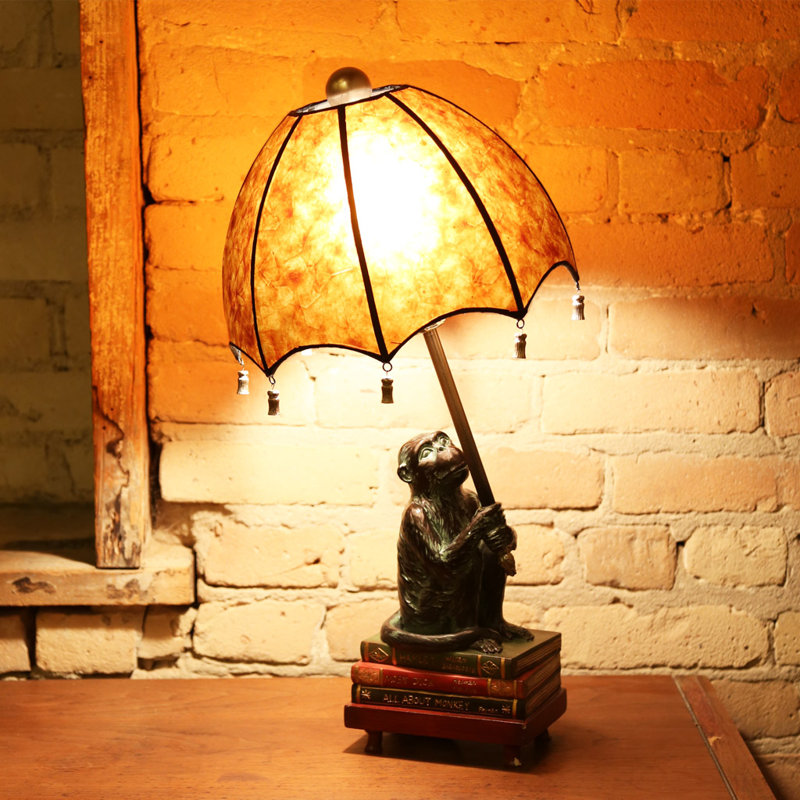
  Crites Intellectual Monkey 22" Table Lamp

I had been on a roll since the new year began. I’ve been revising a collection of poems written in 2015, one for each month, to see if they might work as a chapbook. I just ordered a biography of Fanny Brice, one of the few Ziegfeld-related books I don’t have. Diving back into that sequence of poems is always on the list of projects. Other poems always come out in between.

As of yesterday, my employer was able to set my department up to work at home. The plan now is for two weeks, but since technology now allows us to take calls as home as well, that plan is all the more flexible. The season, which normally begins in May, has been pushed back to June. Even that is just an estimate at this point. A seasonal facility requires time to prepare the grounds, as well as hire and train the much-expanded staff. For now, my job still exists. My Beloved is still employed as well, but since his is a much more isolated situation, as long as the building’s open, he’ll be on site as usual.

I’m feeling grief, sorrow, fear. They come and go, rational and otherwise. I have my teary moments, especially alone, but thank goodness for social media, the perfect medium for social distancing in the friendliest way. Amazon might be out of powdered milk, but here at Casa Diva, there’s a Mabel Normand Film Festival on the schedule tonight, courtesy of Cladrite Radio (check them out!). I am a tireless stocker of basement shelves, so even if an actual food shortage arises, we will be good for a while.

Poetry has been the last thing on my mind in the last two weeks. Guy Reed and I had an interview scheduled for St. Patrick’s Day with Sharon Israel on WIOX in Roxbury, NY that I asked to be postponed, and all live readings are off, for the time being. I had no words to speak about what at the time seemed so minor, at times like these a vanity of sorts. A poem popped out first thing yesterday morning, though. Not a great poem, but a safe observational piece:


            Light

            Lights, lights all around
            until the sun rises up to do its duty,
            including the lamp beside the bed
            I’ve had since college,
            one on the dresser, crystal base,
            kept after a lover went South,
            back East, and I remained
            on the left side of the river.
            A wall sconce illuminates the stairs,
            and the freight train a few blocks off
            is the only traffic moving.

            The birds begin their Spring song of sex and hope,
            eggs for the season glad for the extra space
            tho their brains cannot compute why.
            The air is quieter, dearer,
            busses garaged, cars silent.
            Did the leap day give us twenty-four more hours
            to pretend, until the bulb in our heads went off?

            The light on my desk is on now.
            The computer revs its modest engine,
            eager for the day ahead of
            uncertain emails, calls from frightened customers
            whose yearly nirvana’s been postponed.
            Coffee won’t change things.
            Change isn’t in my power now,
            just awe at Creation pushing me towards
            another life, another reluctant sun. 


Saturday, July 7, 2018

Honorable Mentions- Two More ‘Follies’ Poems


After all but completing a second chapter in my ongoing nonfiction project (more on that later, surely), I’ve returned my attention to my Ziegfeld Follies poems. I’ll be doing a presentation of what I have so far at the Omega Institute on the evening of August 20th. Hopefully, I’ll also have a Power Point presentation, and brief bios for each of the subjects of the poems. I know it’s been a while, so some memories might need a bit of refreshing (ahem).

My focus with this project has been the 1919 edition of the Follies, although for reasons of interest and coherence, the poems have strayed a bit here and there. By 1919, Anna Held, Ziegfeld’s first wife and part of the inspiration for the Follies in the first place, had already passed. Yet, because she is such an integral part of Ziegfeld’s personal and professional life, I’ve included a couple of poems about her and expect to add more. Olive Thomas, by 1919, had long before left Ziegfeld’s show, and side, to become a silent film star, but her enduring presence at the New Amsterdam Theater in the form of a ghost (even to this day) means that a poem or two is required about her as well.

Two Ziegfeld stars were missing from the 1919 edition, otherwise considered the pinnacle of the series. Humorist Will Rogers had also been lured out West to try his luck in films. Silent though they were, Rogers made his presence felt on the big screen, supplementing his appearances eventually with a widely read newspaper column and an easy transition into talkies. If not for his sudden death in 1935, who knows what other razor-sharp insights Rogers might have gifted us with, especially in the War years.

In August of 1919, Fanny Brice gave birth to her first child, a daughter. Obviously this put her out of work for that season, but knowing Brice’s position as a major star in the Ziegfeld universe, this must have been a frustration for both the comedienne and the producer. I knew she and her then-husband Nick Arnstein owned a home on Long Island during those years. I made the leap of assuming that it had been located on the North Shore, where many of the wealthy lived in those days. Thank goodness for Google and my ability to follow a thread! I was even able to obtain a street address, as well as some modern-day photos of the interior and exterior. It is still a private home, well kept and renovated with an eye towards maintains its Victorian charm.

I imagined two scenarios, one of Ziegfeld showing off his new theater to Rogers on a trip back East, and Brice rehearsing on her patio overlooking the Long Island Sound. Both seemed plausible to me, and yet I took a few liberties. I looked up the, and concluded that Rogers certainly could have seen the Ziegfeld Theater close to its opening date. As well, Brice’s home seems to be near enough to the water for her to smell it on a September breeze.

I’ve been a Ziegfeld and vaudeville buff for many years now, but for a while I’d stalled on doing anything creative with the knowledge I’d accumulated. So deep is my awe and respect for these theatrical pioneers that I hesitated, afraid to get the facts wrong, wary of the presumptive tone that dominates so many biographies. Finally, without cracking another book, I leaped in, starting with the stories most repeated. I probably began with Thomas at the New Amsterdam, a hard one to get wrong, but steering clear of the condescending word stuffing that I found in a recent fictionalized account of her life. I’ve got twenty-five pages or so of poems now, and my next step is to comb through the work, making better poetry out of it, and tweaking what facts I can.

I’m not sure how finished any of the poems will be by the time my evening rolls around, but I’ll do my best. My goal is to honor the legend, perpetuate the memories of these remarkable characters, all the while trying to explore their humanity. For many years there was a gap for me. They were old photos, almost always black and white, seemingly from another planet and not just another era. Lately I’ve broken through. This might be where art, the art I can live with, begins.

Wednesday, May 23, 2018

The Follies of 2018- Stay Tuned!


In the frenzy to get a sample chapter of a non-fiction book idea to a publisher, and in the heat of my brain wrapping itself in a new way around the memoir that might take longer to write than it did to live, the Ziegfeld poems I started a few years ago had all but fallen off the radar for me.

Not that the project hasn’t gone anywhere. At last count, I have about twenty-five pages of work, and have mapped out maybe a dozen more topics to explore as fill-ins. I’m trying ultimately to create a cohesive story in verse, and I’ve vacillated on how much emphasis I should place on Prohibition and the Actors Strike, both major events of the 1919 theater season. Also, although my focus is on the 1919 edition of the Follies, that one, although praised as the pinnacle of Ziegfeld’s elaborate revue series, is lacking two major performers.

Fanny Brice was still on maternity leave in the fall of 1919. Her daughter, Frances, would grow up to marry producer Ray Stark. Stark would produce the film version of Fanny’s life story, Funny Girl. And so goes the circles upon circles that connect the entertainment worlds of past and present.

Will Rogers, a clever character who toured the world as a trick roper, found his everlasting fame as a wisecracking political commentator (while still twirling that rope) in Ziegfeld’s shows. By 1919, however, Rogers had gone out West to try his luck in Hollywood.

So, I’ve broadened the scope to include events outside of the holy ’19, perhaps a mishmash of legends and rumors. And, just to make things interesting, I’ve been invited to be a part of the Monday night lecture series at the Ram Dass Library at the Omega Institute, in Rhinebeck, NY. On a whim, I suggested the topic of the Ziegfeld Follies, and a presentation including my poems. They bought it. So now I’m committed.

I’ve been fooling around with Power Point, too. Maybe I’ll play a CD of period music while the crowds pile in. It’s always good to find another angle to approach the old material from. I’ve dabbled in vaudeville and early musical theater for years now. I’m glad to be able to see the various shapes my research can be translated into. Hopefully a few others will, too.